
Natural draft or power vent? Gas, propane, or electric? We break down every type so you can make a confident decision - then get your exact installed price in 30 seconds.
We'll recommend the right tank for your home - no upsell, no pressure.
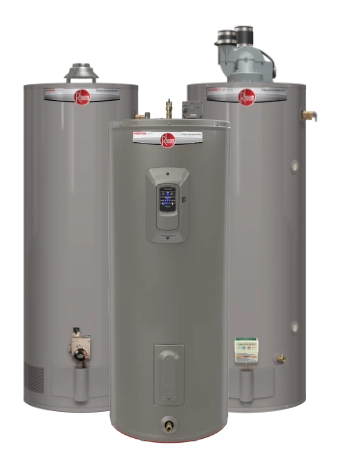
A storage tank water heater keeps 30–80 gallons of water heated and ready at all times. A gas burner, electric heating elements, or a propane burner maintains your set temperature continuously. When you turn on a hot tap, pre-heated water flows out immediately - no wait, no ramp-up.
They're the most common type of water heater in West Michigan homes by a wide margin. Simple, proven technology with a track record measured in decades. The main decisions are which vent type your home supports and which fuel source you're working with.
Gas and propane tank water heaters come in two venting styles. Your home's existing setup usually determines which one you need.
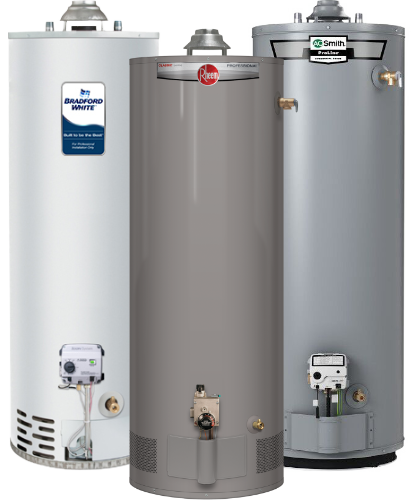
Standard
Gas · Propane
Natural draft units vent combustion gases using natural buoyancy - hot exhaust rises up through a metal flue pipe that runs vertically through the roof or chimney. No electricity required for venting. This is the most common setup in West Michigan homes and the simplest, most affordable option when your home already has the vertical flue in place.
Advantages
Limitations
Best for:
Homes replacing an existing natural draft unit in the same location. The most common and most straightforward same-day replacement.
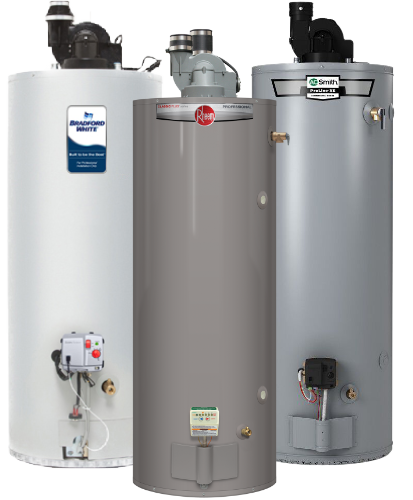
Flexible Venting
Gas · Propane
Power vent units use an electric blower fan to push exhaust gases through PVC pipes that can run horizontally and up to 60–100 feet. This makes them ideal when there's no existing vertical flue, when you're moving the water heater to a new location, or when the home has a sealed or conditioned space where an atmospheric vent isn't practical.
Advantages
Limitations
Best for:
Homes without an existing vertical flue/chimney, newer construction, or anyone moving their water heater to a different part of the house.
Not sure which vent type your home has? Call us - we can usually tell from a quick description or a photo.
Your home's fuel source is typically already decided for you. Here's how each type performs.
Most Common
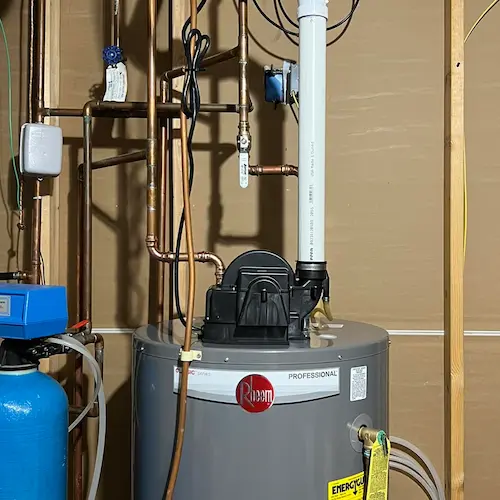
Connected directly to your home's gas line. The most common fuel type in Grand Rapids. Heats water quickly, costs less to operate than electric, and doesn't require any fuel storage.
Rural & Off-Grid
Propane units perform nearly identically to natural gas but draw from a propane tank on your property. Common in rural West Michigan homes that don't have access to natural gas lines.
No Venting Required
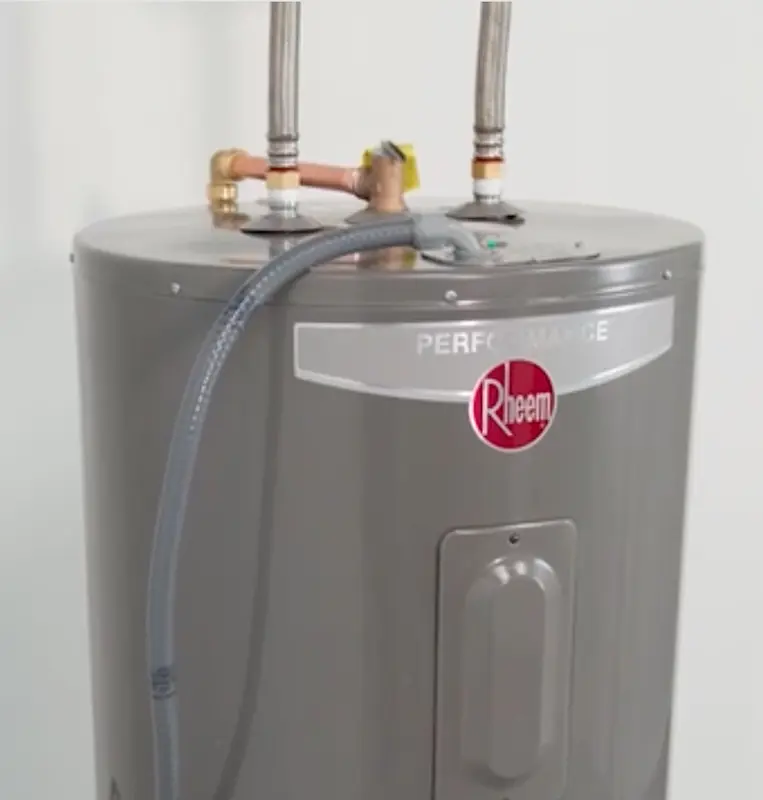
Electric units use internal heating elements and require no venting - they can go anywhere a 240V electrical circuit can be installed. Simpler installation, slightly higher operating cost, and a slower recovery rate than gas. Often the only option in all-electric homes.
These are the specs and features that actually matter when comparing models.
How many gallons the unit can deliver in the first hour of use - the most practical performance measure for households. A 50-gallon gas unit typically delivers 60-90 gallons of hot water in the first hour.
Gallons of cold water heated per hour after the initial supply is used. Gas units recover much faster than electric - important for large households with back-to-back demand.
The efficiency rating for water heaters. Higher is better. Most standard tank units fall between 0.60–0.70 UEF. High Efficiency tankless units can reach 0.95 UEF.
A protective enamel coating on the inside of the steel tank resists corrosion. Combined with the sacrificial anode rod, it's what gives a quality tank its lifespan.
A sacrificial magnesium or aluminum rod inside the tank that corrodes slowly to protect the steel lining. Replacing it every 3–5 years significantly extends tank life. Often the single best maintenance investment.
A critical safety device required on every tank water heater. It releases pressure if the tank overheats or over-pressurizes, preventing rupture.
What Tank Water Heaters Do Well
Tank Water Heater Limitations
A quality tank water heater installed by a licensed plumber will typically last 10–14 years. Electric units often reach the higher end of that range since there's no combustion cycle wear. Units in homes with hard water (very common in West Michigan) can age faster without maintenance.
The single biggest factor in lifespan is the anode rod. Most homeowners don't know it exists - it's a magnesium or aluminum rod inside the tank that corrodes slowly to protect the steel lining. When it's depleted, the tank itself starts to corrode. Replacing it every 3–5 years can add years to your unit's life.
Flush several gallons through the drain valve to remove sediment buildup from the bottom of the tank.
Check all water heater connections and fittings for leaks or signs of corrosion.
Test the temperature/pressure relief (TPR) valve by lifting the lever briefly to confirm it releases and reseals properly.
Inspect and replace the anode rod. This is the most impactful maintenance task for extending tank life.
Start budgeting for replacement. Even a healthy unit at 10+ years is past its most reliable window.
When should you replace instead of repair?
If your unit is over 10 years old, any repair worth more than a minor part (anode rod, thermostats, elements) is usually a poor investment. The tank itself degrades over time regardless of how well you maintain it. A leaking tank is never repairable - that's always a replacement.
Signs it's time to replace your tank water heater:
One price covers everything below - no line-item surprises, no return trips to finish the job.
Professional Grade Water Heater
Rheem professional grade water heater - not a generic box store unit - sized for your home. Often installed the same day.
2-Year Craftsmanship Guarantee
We’re professionals in our field, but we’re also human. If we make a mistake on your installation, we take full responsibility and will come back to fix it at no charge.
One Price, Zero Surprises
No additional fees, addons, or upsells. All parts & labor included: removal of old unit, installation, connections, testing - one tech, one visit, one price.
100% Satisfaction Guarantee
We stay until the job is finished, your questions are answered and you feel confident using your new system.
Also included - every time
Trusted by homeowners in Grand Rapids and across West Michigan.
“Immediate and professional response. Did not try to oversell, merely met my needs and verified functionality thoroughly.”
- Allison K., Grand Rapids
“Efficient, friendly, and fair.”
- Sue M., Grand Rapids
“Very easy to work with, great quality, stuck to estimates, very professional, no bs.”
- John S., Dorr
“Great customer service. Did all work quickly and professionally. They cleaned up afterward and even replaced custom insulation.”
- Eric V., Holland
“Showed up on time, knew what he was doing, got the job done quickly, on budget and completely.”
- Dane B., Ada
“Took the time to educate us so we could be empowered, not overpowered. I want you to know how impressed I was by his integrity.”
- Laura B., Hudsonville
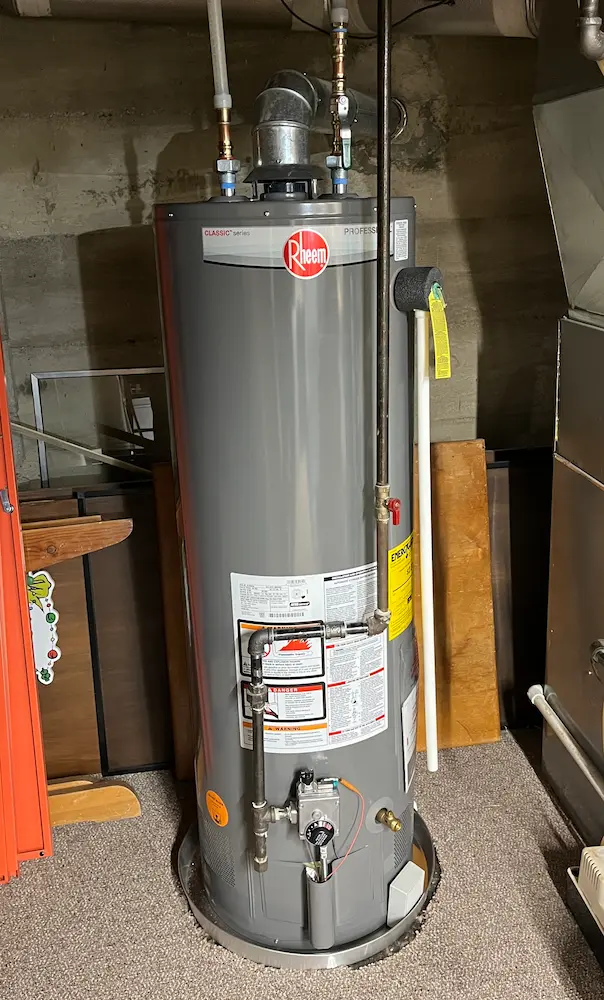
Look at the top of your water heater. If there's a large metal flue pipe (3"–4" diameter) that connects to your chimney or runs up through the ceiling, it's natural draft. If there's plastic PVC pipe running horizontally out through a wall, that's a power vent. You'll also notice a small blower fan and electrical cord on top of a power vent water heater.
For most West Michigan households: 40 gallons handles 1–4 people, 50 gallons handles 4-5 people, and 75+ gallons is appropriate for 5 or more. Tankless units can send hot water to all your showers simultaneously indefinitely. But first-hour rating matters more than tank size alone - a 50-gallon gas unit can deliver far more hot water in the first hour than a 50-gallon electric unit. We'll help you find the right size based on your household's actual usage.
Yes, and it's a common upgrade. If your vertical flue is deteriorating, you want to remove your chimney, or you want to move the water heater to a new location, switching to power vent avoids the expense of rebuilding a metal flue. The PVC venting for a power vent unit is less expensive and more flexible. We'll let you know if a switch makes sense for your situation.
You can, but it comes with tradeoffs. Switching from electric to gas requires a gas line to be run to the location, which adds cost but results in a faster-recovering, lower-operating-cost unit. Switching from gas to electric is simpler if you have a 240V circuit nearby, but you'll give up some recovery speed. If you're already replacing a failed unit, we can walk you through whether a fuel switch makes sense.
Most standard replacements - same vent type, same location - take 2–3 hours from arrival. If you're switching vent types, moving the unit, or upgrading a gas line, plan for a half-day to full day. We'll give you an accurate time estimate before we start.
Yes. A permit is required for all water heater replacements in Grand Rapids and all West Michigan municipalities. We pull the permit and schedule the inspection as part of every installation - it's included in your price. Some contractors skip this to save time and hassle; we won't. It is required by the state for your protection and ensures the work is inspected for safety and code compliance. If you see a quote that doesn't include a permit, or a contractor that offers a discount to bypass an inspection, that's a red flag.
Get your exact installed price in 30 seconds - or call us and we'll walk you through the right option for your home.